
Disclaimer: Open xOps does not endorse or recommend specific products or platforms. Any references are based on field observations and the presence of these technologies across publicly available case studies and real-world implementations.
What are we solving for?
Most reliability strategies in media are solving the wrong layer. How do you measure and control reliability in live contribution—operationally, not theoretically?
Live contribution failures rarely start at the encoder, and they almost never get solved there either. Reliability in media is an operational problem, not a compression problem.
This article outlines how to integrate contribution systems with software-defined xOps platforms so that contribution becomes a managed, visible, and schedulable service.
Setting the stage
How do we move media with the lowest latency and highest quality?
- Contribution platforms (e.g., Appear X) are purpose‑built for live events, enabling broadcasters to deliver immersive, high‑quality viewing experiences with near‑real‑time latency.
- These platforms support remote and distributed production workflows, allowing broadcasters to reduce on‑site infrastructure and personnel while preserving production quality and operational resilience.
- Their compression technologies are optimized for live workflows, enabling high‑quality video transmission with ultra‑low latency and efficient bandwidth usage—critical for time‑sensitive live events.
- Hardware‑accelerated SRT, integrated directly into the platform, allows broadcasters to reliably transport media over IP networks while mitigating packet loss, jitter, and network instability.
How do we know it’s working? How do we act when it isn’t? How do we automate this at scale?
- xOps platforms (e.g., DataMiner) are end‑to‑end software stacks that provide observability, orchestration, automation, scheduling, and AI‑driven analytics across heterogeneous media and network environments.
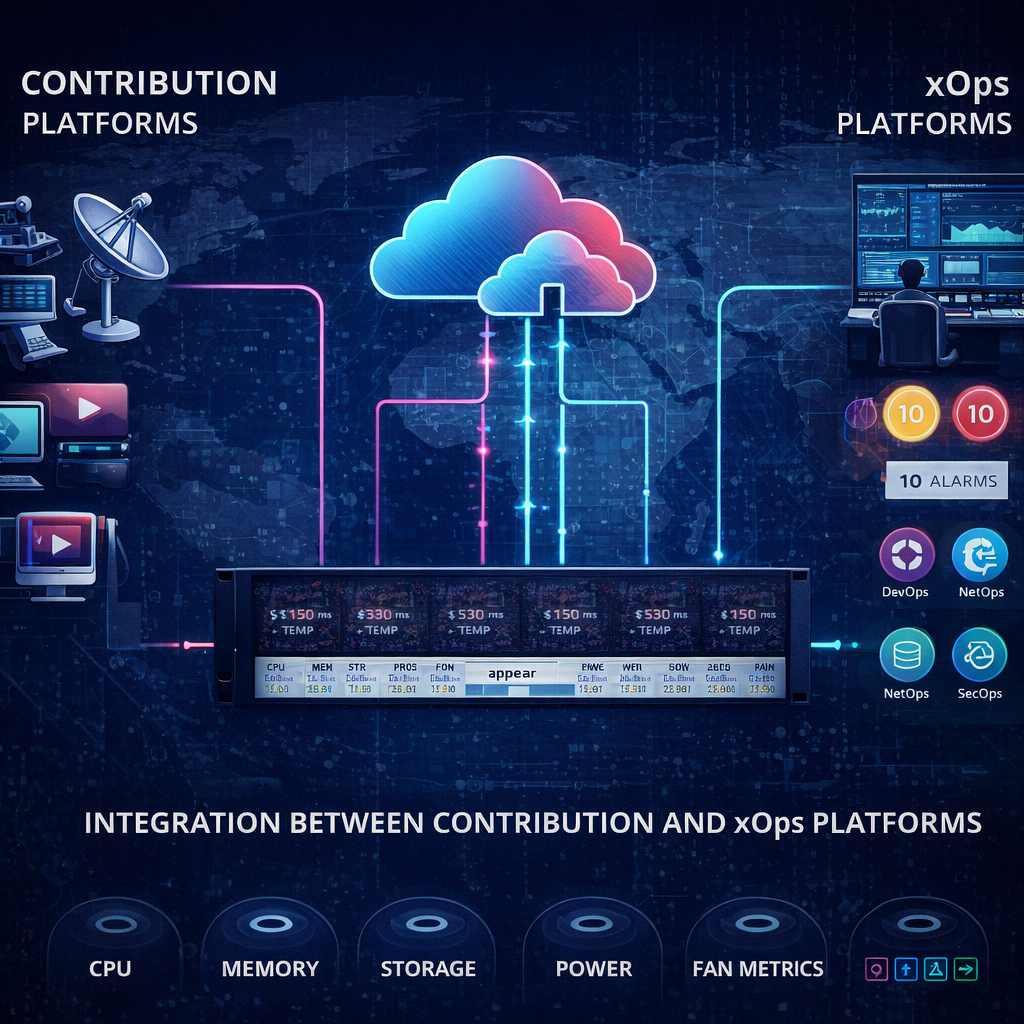
- By integrating with specialized contribution platforms and surrounding systems, xOps systems deliver full observability across the entire service chain, not just within individual devices or workflows.
- The xOps software stack tracks critical metrics and workflows in real time, before and after contribution stages, enabling operators to understand service health in context rather than in isolation.
- This contextual insight allows teams to detect issues early, correlate faults across domains, and take corrective action—manually or automatically—before media quality or SLA commitments are impacted.
- At scale, xOps systems enable policy‑driven automation, turning operational intent (for example, protecting latency, uptime, or redundancy) into repeatable, system‑wide actions across multiple live services.
Mental Model Diagram
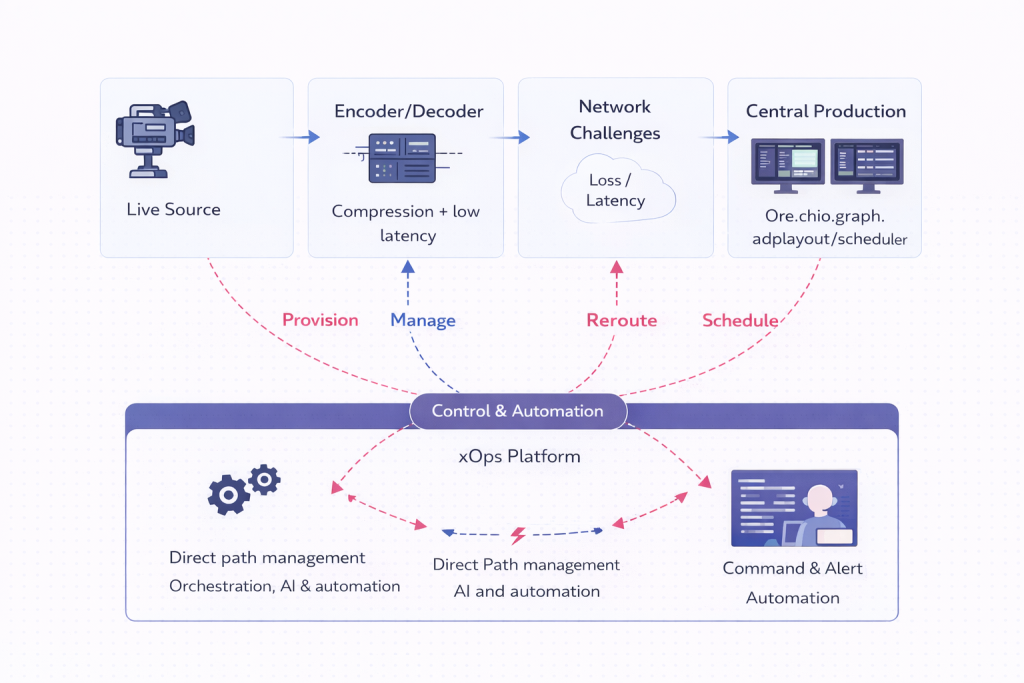
The diagram below outlines a high-level media contribution flow, where specialized systems integrate to deliver streams from source to production.
Monitor – What Do We Need to Know, Operationally?
| Question | Example KPIs |
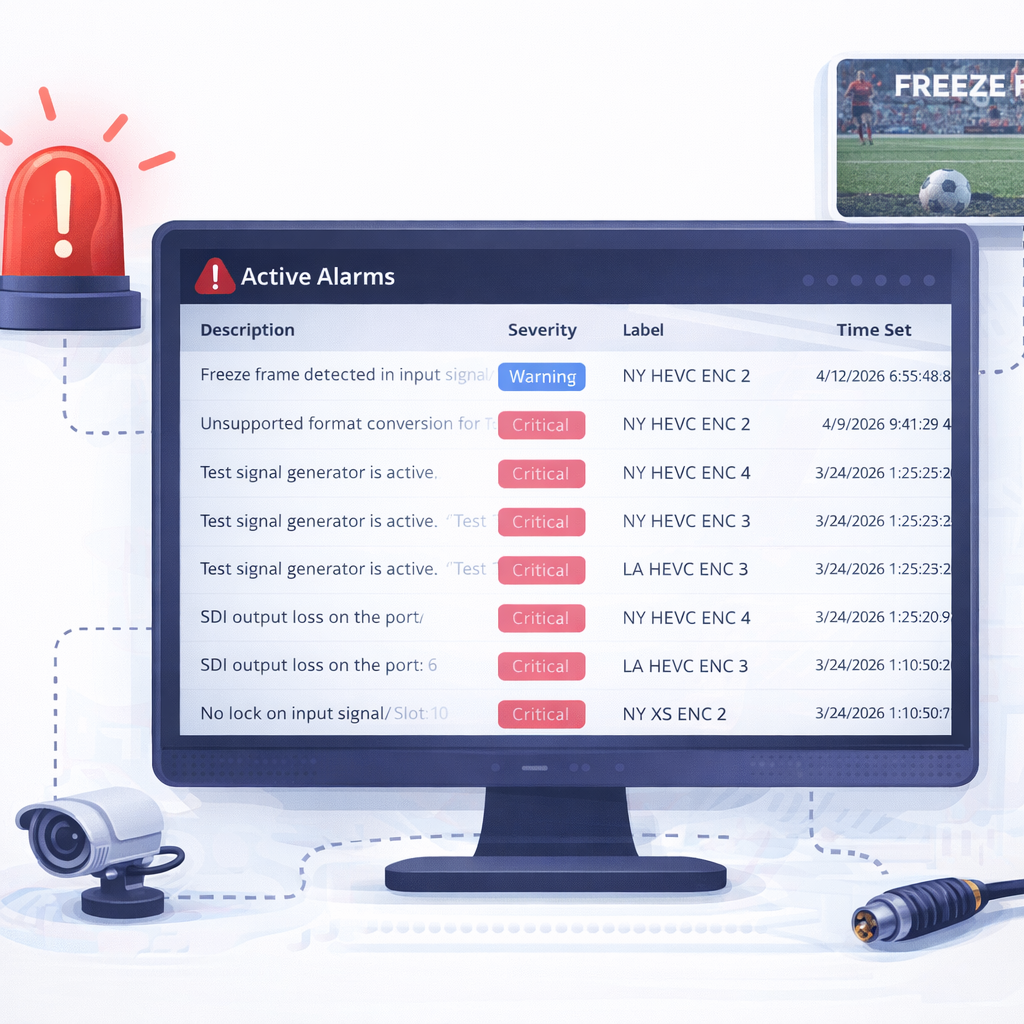
| Is media flowing? | Input lock, freeze-frame detection |
| Is quality degrading? | Compression errors, jitter, packet loss |
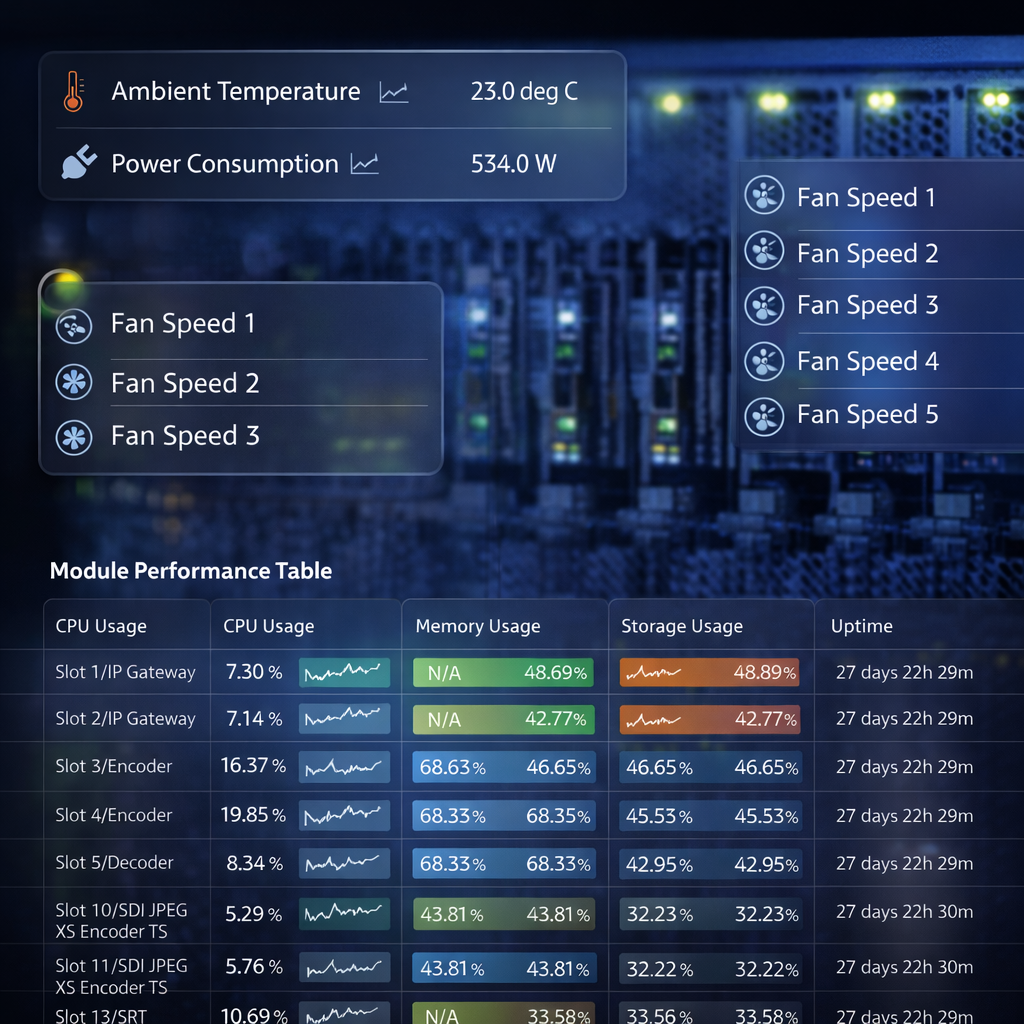
| Is hardware healthy? | Temperature, power, fan speed |
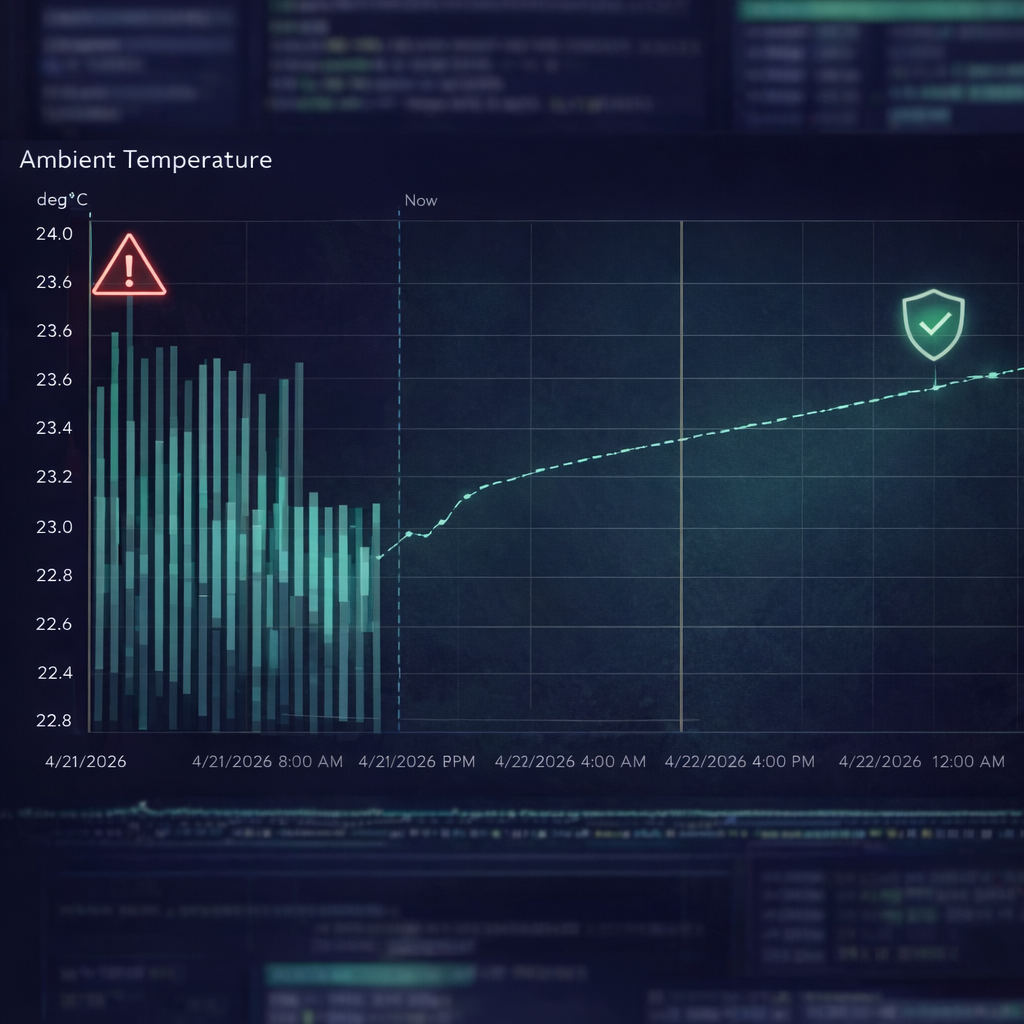
| Is the service reliable over time? | Trends, anomaly detection |
To answer these questions in real time, specialized media contribution platforms (e.g., NetInsight) use an API‑first approach, exposing rich telemetry and control interfaces. The role of the monitoring and control plane (e.g., DataMiner) is to contextualize that data, filter out noise, and surface what truly matters, enabling fast, clear, and actionable operational decisions.
Is media flowing? Is quality degrading?
Is hardware healthy?
Is the service reliable over time?
Modern operations demand more than hindsight. Predictive analytics are essential when managing environmental constraints, cloud costs, and finite bandwidth in live media workflows.
Automate – What actions can we take?
Observability alone tells you what failed; an end‑to‑end xOps stack ensures most issues are both identified and resolved automatically. Some examples are:
| Symptom | Likely Cause | What Software Can Do |
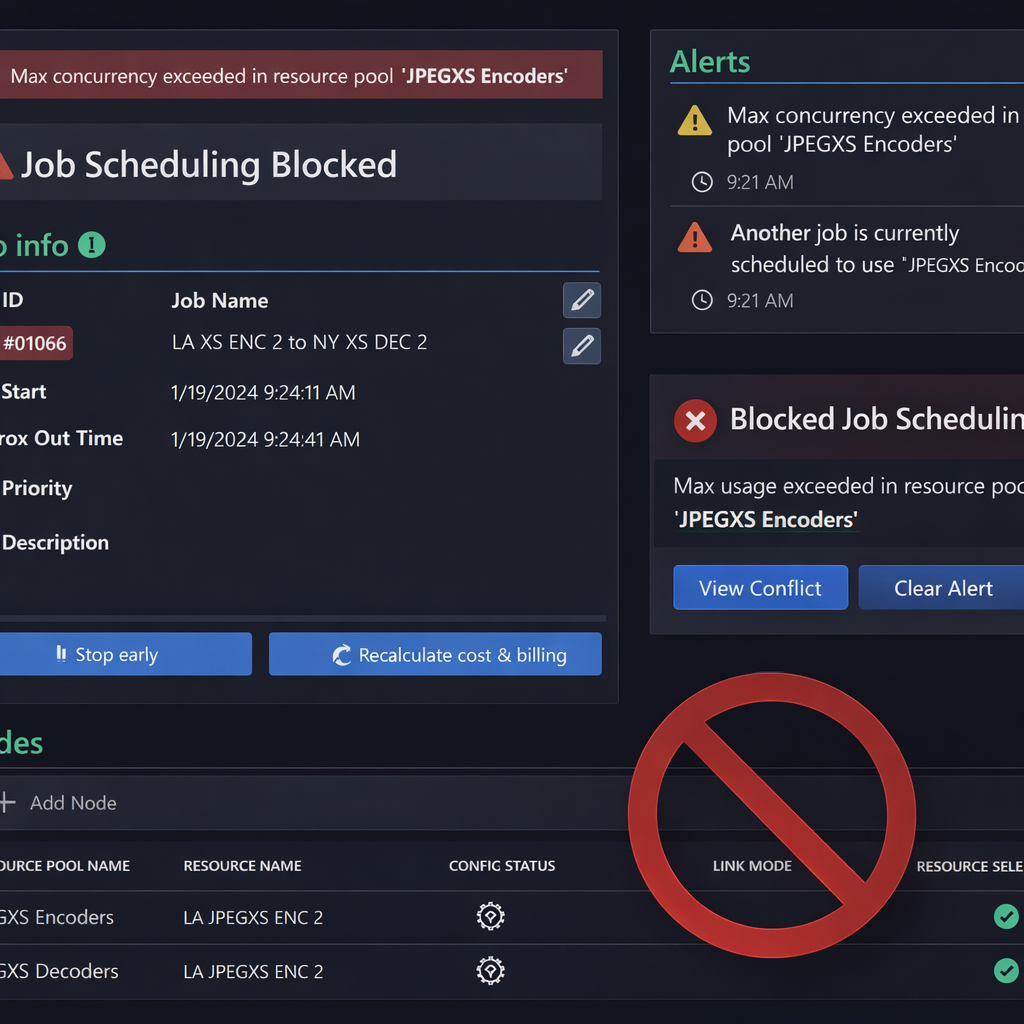
| No input lock | Source offline | Alert + block job scheduling |
| Freeze frame | Upstream encoder issue | Trigger failover |
| SDI output loss | Local IO issue | Flag service degraded |
Alert + block job scheduling
Orchestrate – Let software decide what happens next
Monitoring and automation can work in isolation—but they don’t scale. True lights‑out operations require orchestration built on an integrated foundation.
Ad-hoc workflows
Contribution platforms (e.g., Techex) that take an API‑first design enable workflows—routing, configuration, and service control—to be managed entirely in software, rather than through device‑level or out‑of‑band interfaces.
A vendor‑agnostic control plane (e.g., DataMiner) sits above these platforms, consolidating control and orchestration into a single interface. This allows operators to act across the full service chain—instead of managing each device in isolation.
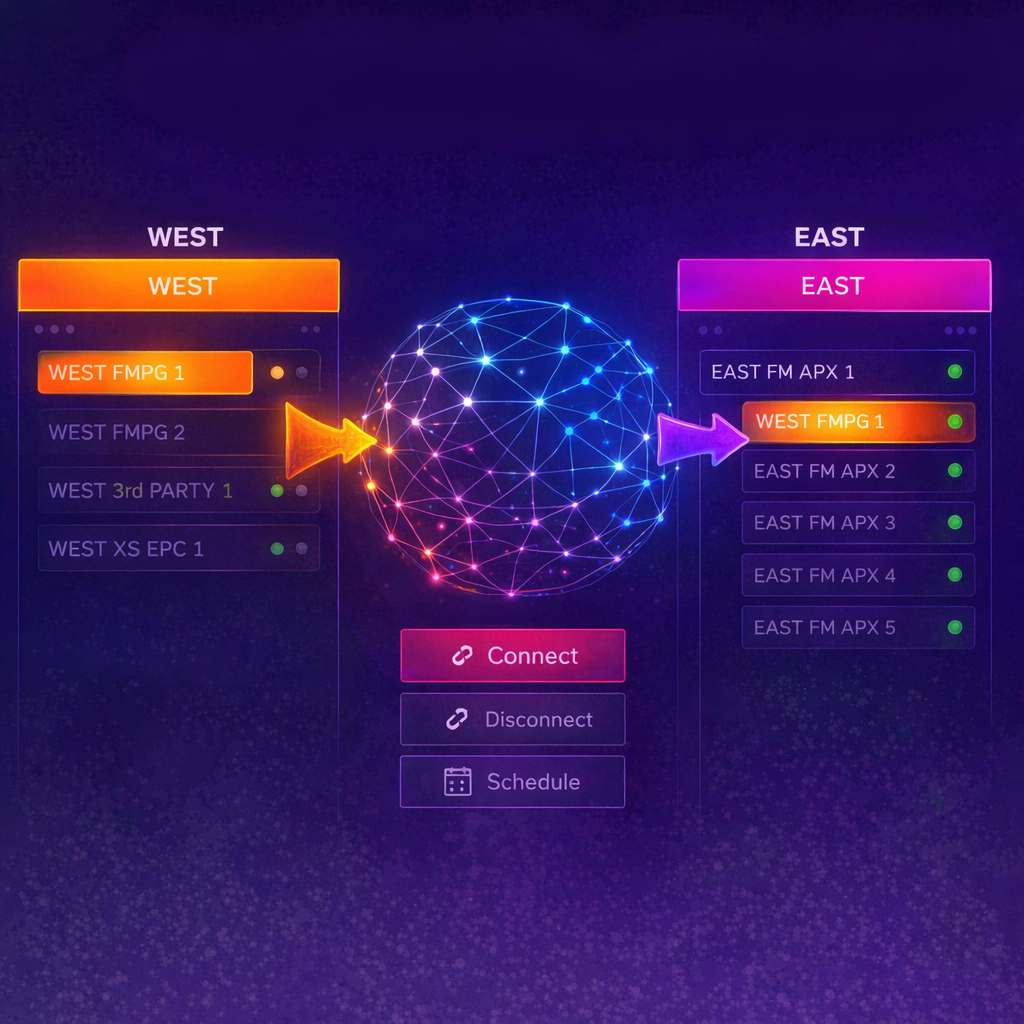
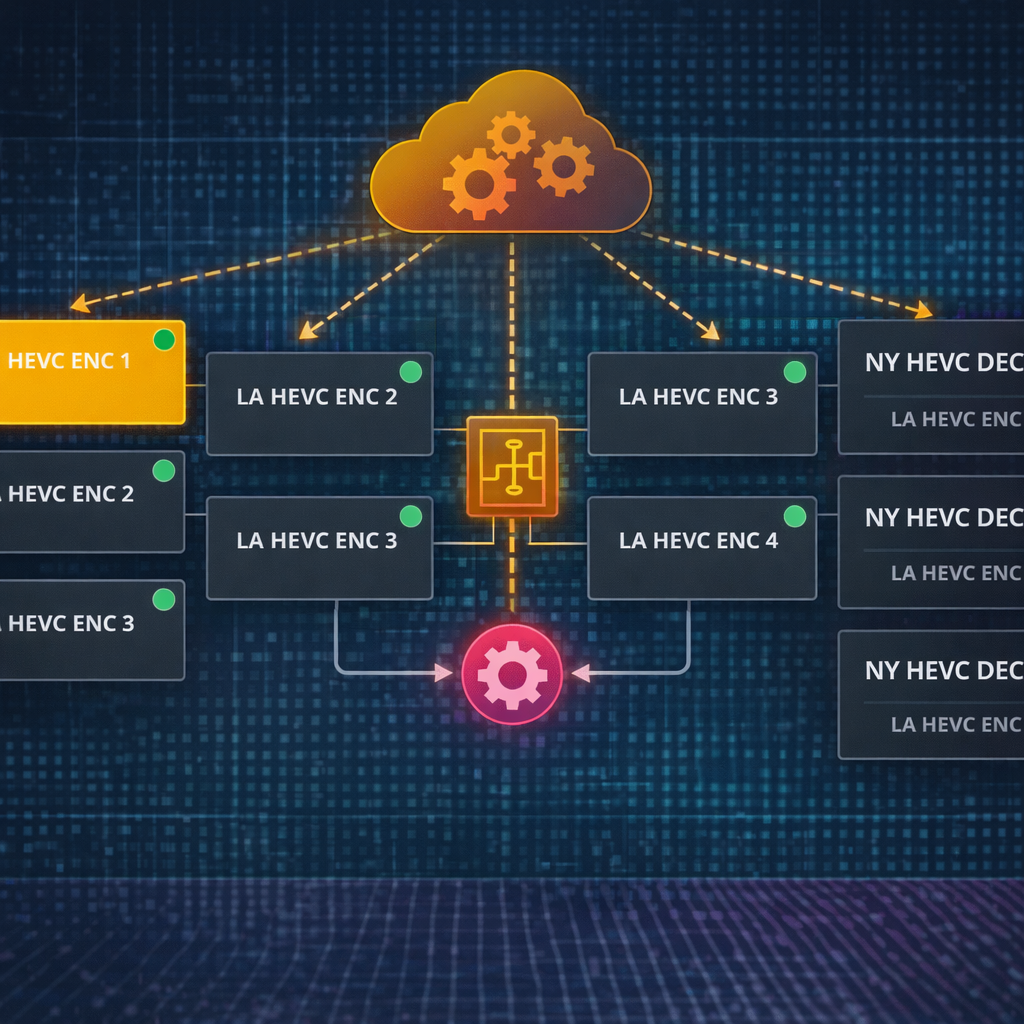
In practice, operators can connect sources to destinations (encoder → decoder) across multiple nodes directly from the control plane stack. But the real value comes from extending workflows together with business needs using the same approach.
For example, a live feed encoded on a contribution platform (e.g., LTN) can be routed into a cloud transport (e.g., AWS MediaConnect), validated with network KPIs, and then triggered downstream into a production workflow (e.g., Grass Valley AMPP)—all orchestrated from the same control plane. Operators don’t switch tools; the workflow remains continuous, observable, and controllable end‑to‑end.
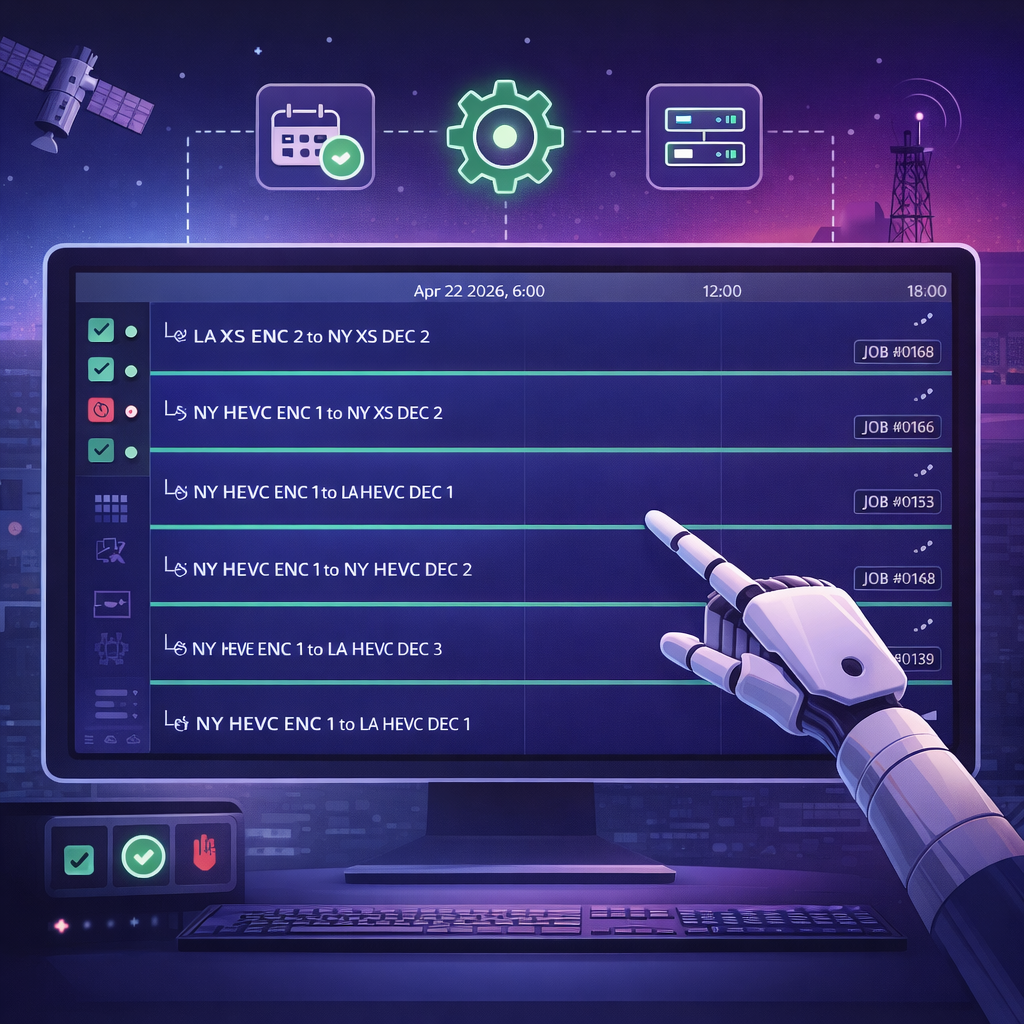
Scheduled workflows
Scheduling is fundamental to automation and reliable, lights‑out operations.
In practice, however, media workflows quickly outgrow simple schedulers. Jobs vary by event, recur unpredictably, and depend on coordinated use of encoders, networks, cloud services, and human operators.
To manage this complexity, you need a control plane that treats these components as part of a single, unified workflow.
This becomes especially critical in cloud environments, where resources must be provisioned just‑in‑time and released immediately after execution to control cost.
In this model, resources can span multiple vendors and technologies—but are abstracted behind a common control plane that represents the digital twin of the operation. This allows workflows to be scheduled and executed consistently, independent of the underlying infrastructure.
State-aware workflows
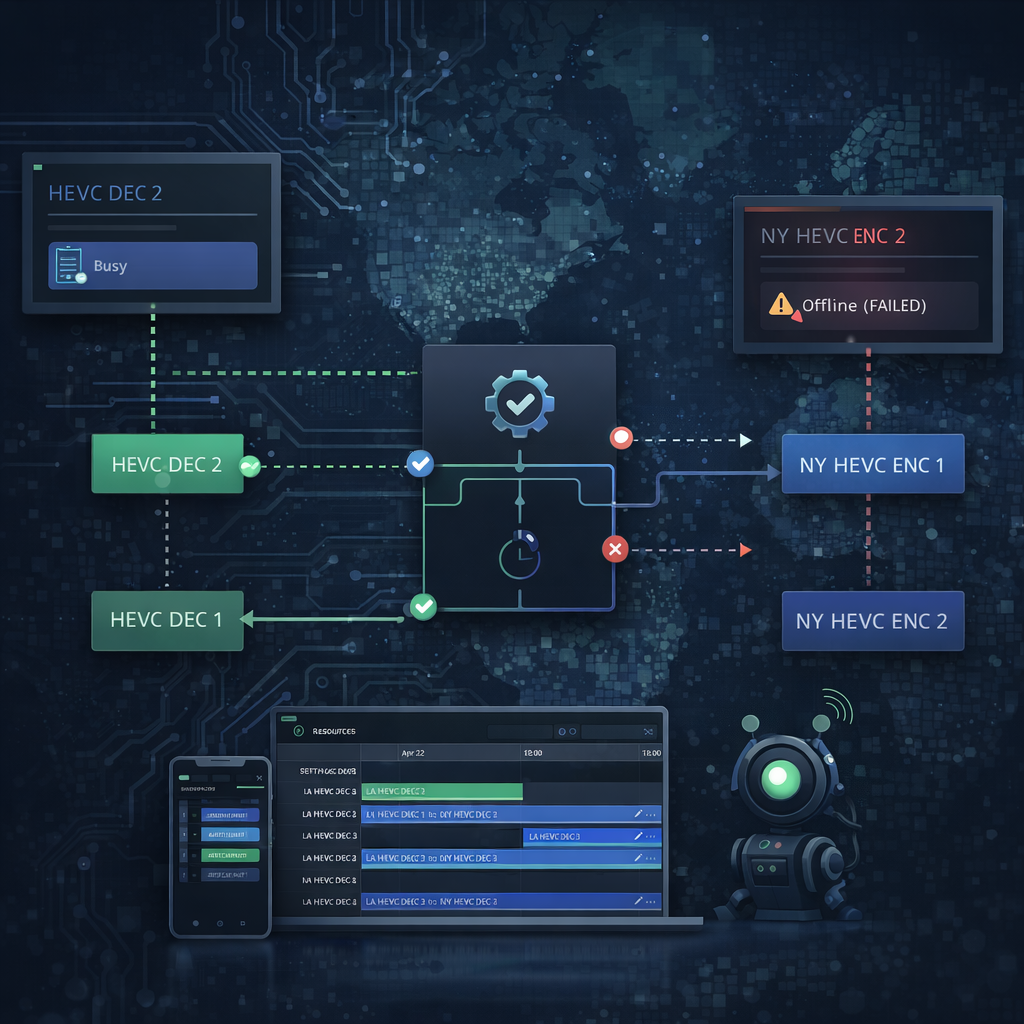
As operations scale, Media workflows rely on shared resources, recurring jobs, and strict timing constraints that can’t be managed in isolation.
A control plane must be state‑aware—tracking resource current and future commitments—so capacity is allocated when needed and released immediately after.
This level of orchestration is essential for efficiency and reliability at scale.
Wait! What about AI?
AI is being pitched as a silver bullet for media operations—but intelligence only delivers value when it operates within real‑time context and domain awareness.
Professional platforms, as the ones referenced in this article, already embed an understanding of workflows, failure modes, and operational intent. That makes them far better foundations for AI than generic tools trying to learn broadcast behavior after the fact.
A common anti‑pattern is exporting raw telemetry from an xOps stack into a data lake and expecting downstream AI to “figure it out.” Historical data has its place, but it lacks the immediacy and context required for live operations.
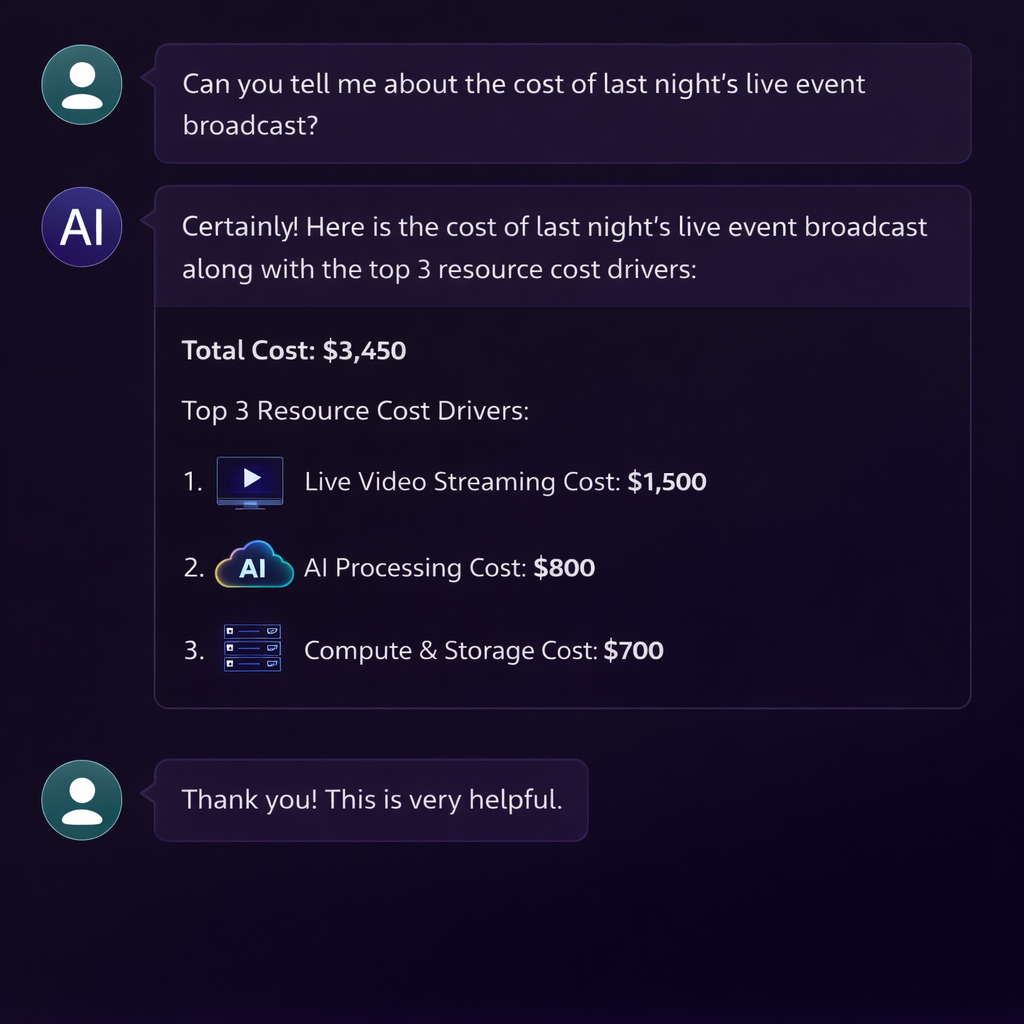
The real opportunity is at the control plane. By integrating AI agents directly into live systems—where they can access telemetry, service state, and automation hooks—AI can move from passive insight to active control.
In an agentic model, the Control Plane AI agent becomes an operational interface: answering real‑time questions, supporting operators, and enabling external agents (such as FinOps) to interact directly with the live system.
Vendor-agnostic doesn’t mean vendor-ignorant
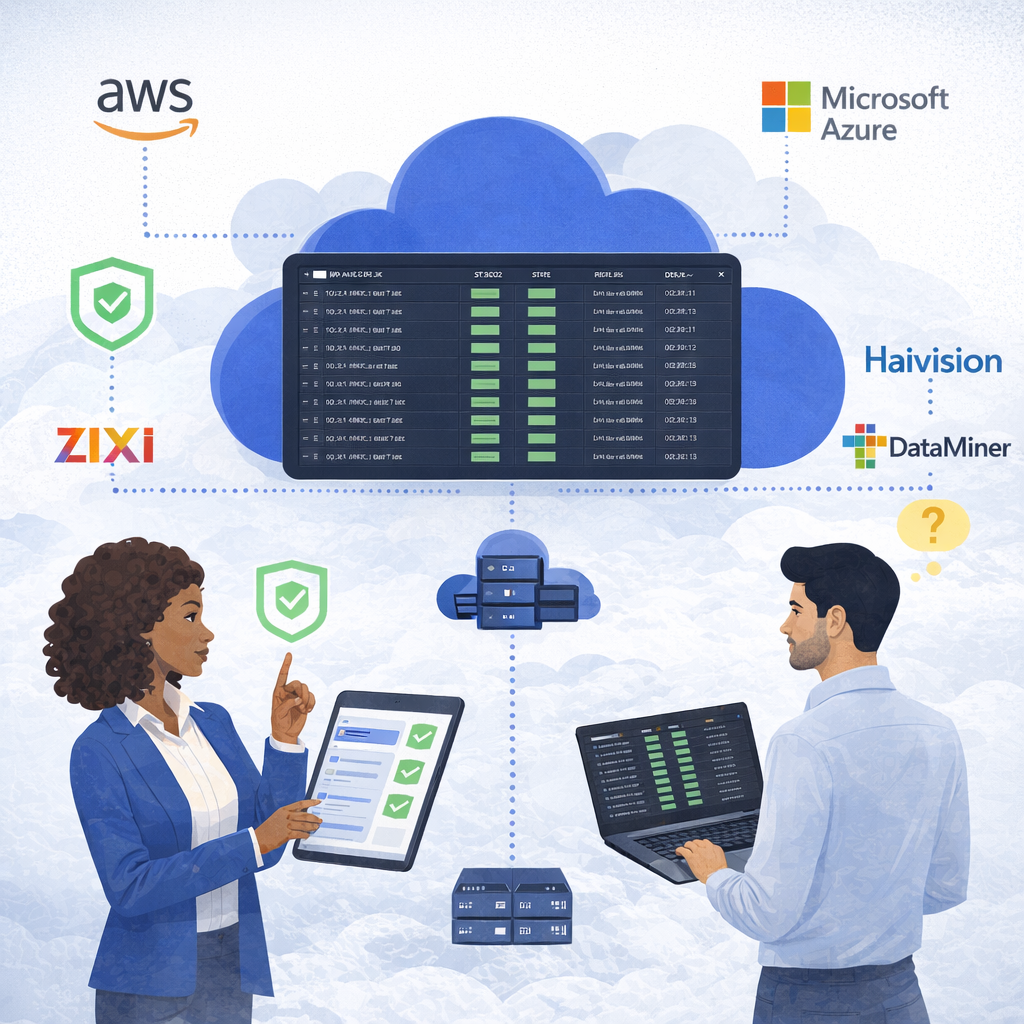
Business objectives should drive vendor choices, not the other way around. Modern broadcast architectures are inherently multi‑vendor, but that doesn’t mean all platforms are interchangeable. Best‑of‑breed systems earn their place by doing one thing exceptionally well.
Proven contribution platform (e.g., HaiVision) come with maturity and field‑tested performance, which translates to operational predictability. The job of the technology decision maker is to ensure selected platforms deliver today and into the future. Cost efficiency needs to be assessed for CAPEX and OPEX which requires careful analysis and business strategy understanding.
The same principle applies to operational control planes. xOps enabling platforms (e.g., DataMiner) are not just solving today’s monitoring or alerting needs, they are designed to evolve with the business as workflows become more automated, more interconnected, and increasingly software‑defined.
Takeaways
Media reliability is an operational systems problem—not a codec problem.
Success or failure is determined by visibility, correlation, automation, and control across the workflow, not by compression settings in isolation.
Best‑of‑breed media platforms only scale with an external control plane.
Specialized systems in contribution and transport platforms reach their full value when orchestration, monitoring, and automation are handled independently and holistically.
Organizations that treat contribution as a service, not equipment, move faster and fail less.
Abstracting infrastructure into schedulable, observable services enables resilience, repeatability, and continuous improvement at scale.
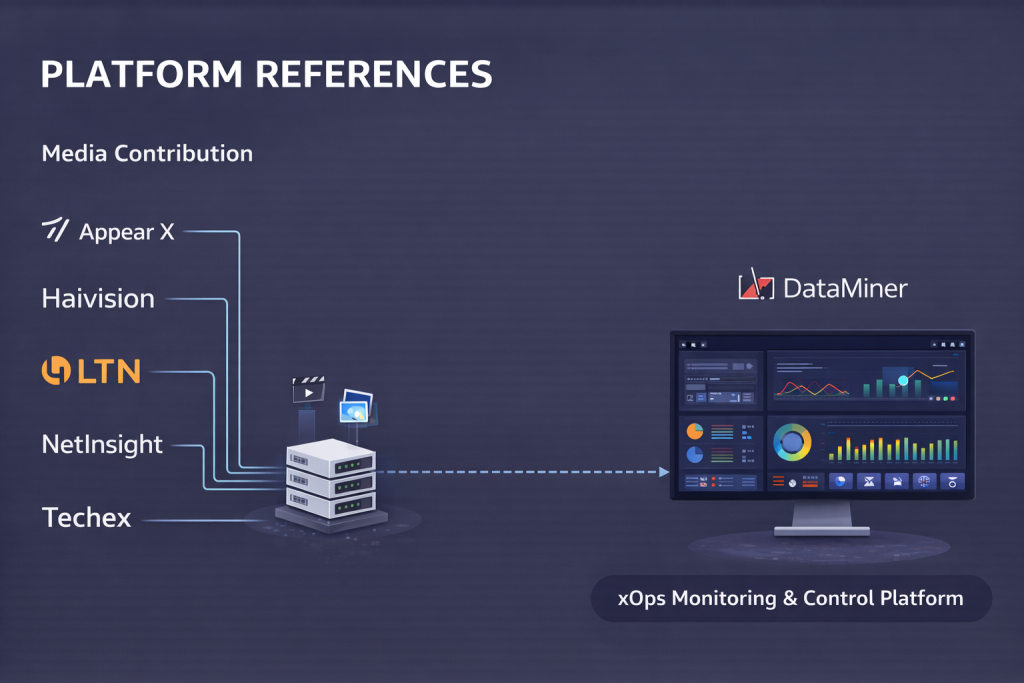
Platform References
Disclaimer: Open xOps does not endorse or recommend specific products or platforms. The selection of technology solutions remains the responsibility of the technology advisor or organization, who must evaluate and choose the options that best align with their specific business objectives and operational requirements.
Media Contribution
xOps Monitoring & Control Plane
Leave a Reply